Here's the uncomfortable truth about winterization: almost every expensive spring repair we see traces back to one skipped step in the fall. Not a freak storm, not a bad winter — a skipped step. Freeze damage is mechanical and predictable, which means it's almost entirely preventable.
This is the honest version of what matters, ordered by the size of the check you'll write if it's done wrong.
The $4,000 mistake: underground plumbing
Water expands about 9% when it freezes. Inside a buried PVC return line, that expansion splits the pipe along its length — and you won't know until spring, when the backfill has turned to mud and the deck above it starts to settle. Repair means excavation, deck demolition, new line, new deck. It is the single most expensive winter failure, and it comes from one skipped step: blowing the lines.
Every line — skimmer, returns, cleaner line, water features — gets blown clear with a blower, then plugged. Antifreeze goes into lines that can't be fully cleared by slope or geometry. 'I drained the pump' does nothing for the pipe three feet underground.
The $1,500 mistake: the equipment pad
Pumps, filters, and heaters all hold water in places you can't see. Drain plugs come out — all of them, including the ones at the bottom of the filter tank and inside the heater manifold. A heater's heat exchanger is copper coils that split quietly and expensively. We label and bag every plug so spring reassembly isn't a treasure hunt.
If you have a salt cell, it comes off, gets cleaned, and goes inside. Calcium scale hardens over winter and a scaled cell limps through the next season at half output.
The $800 mistake: chemistry at closing
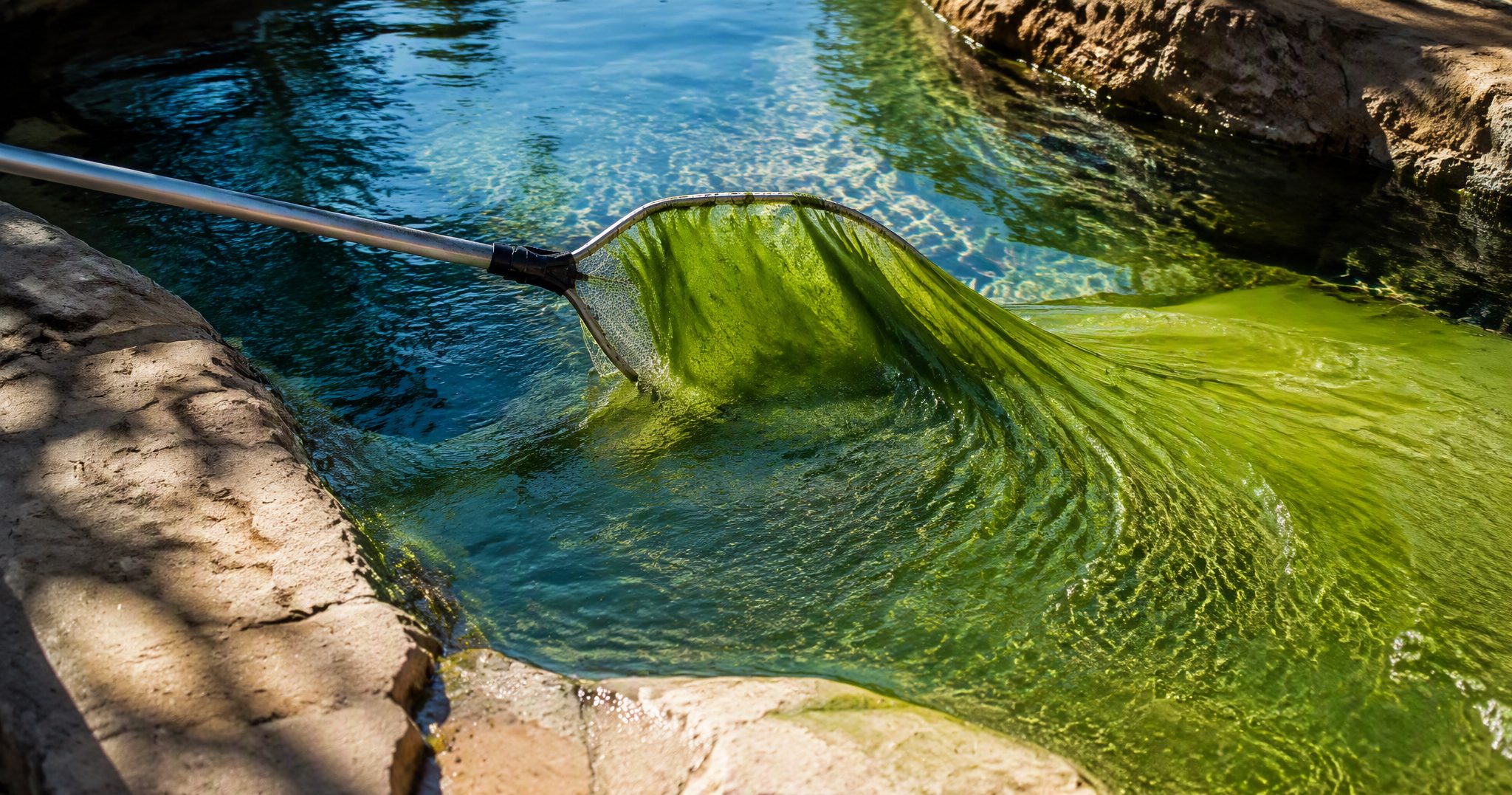
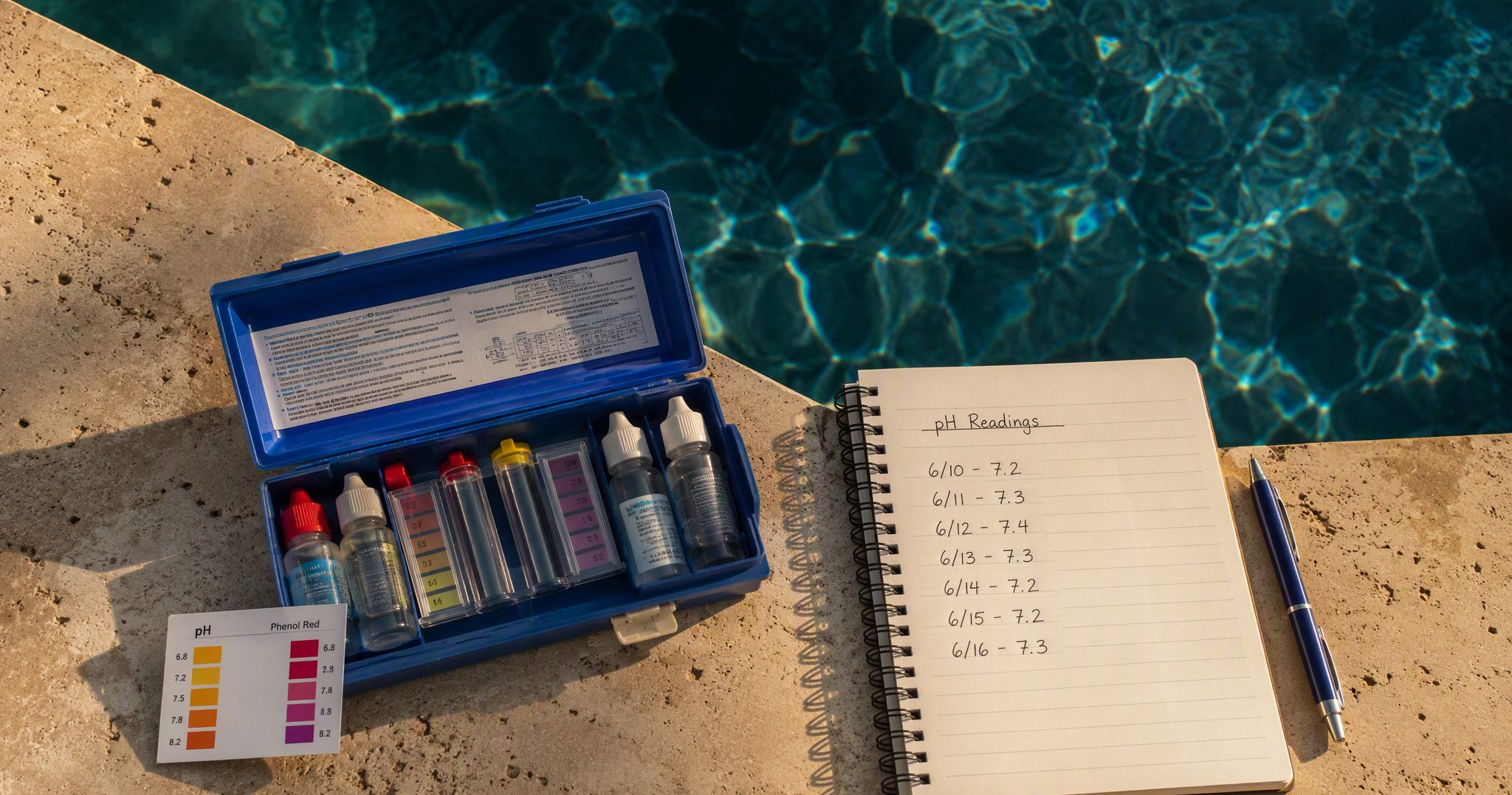
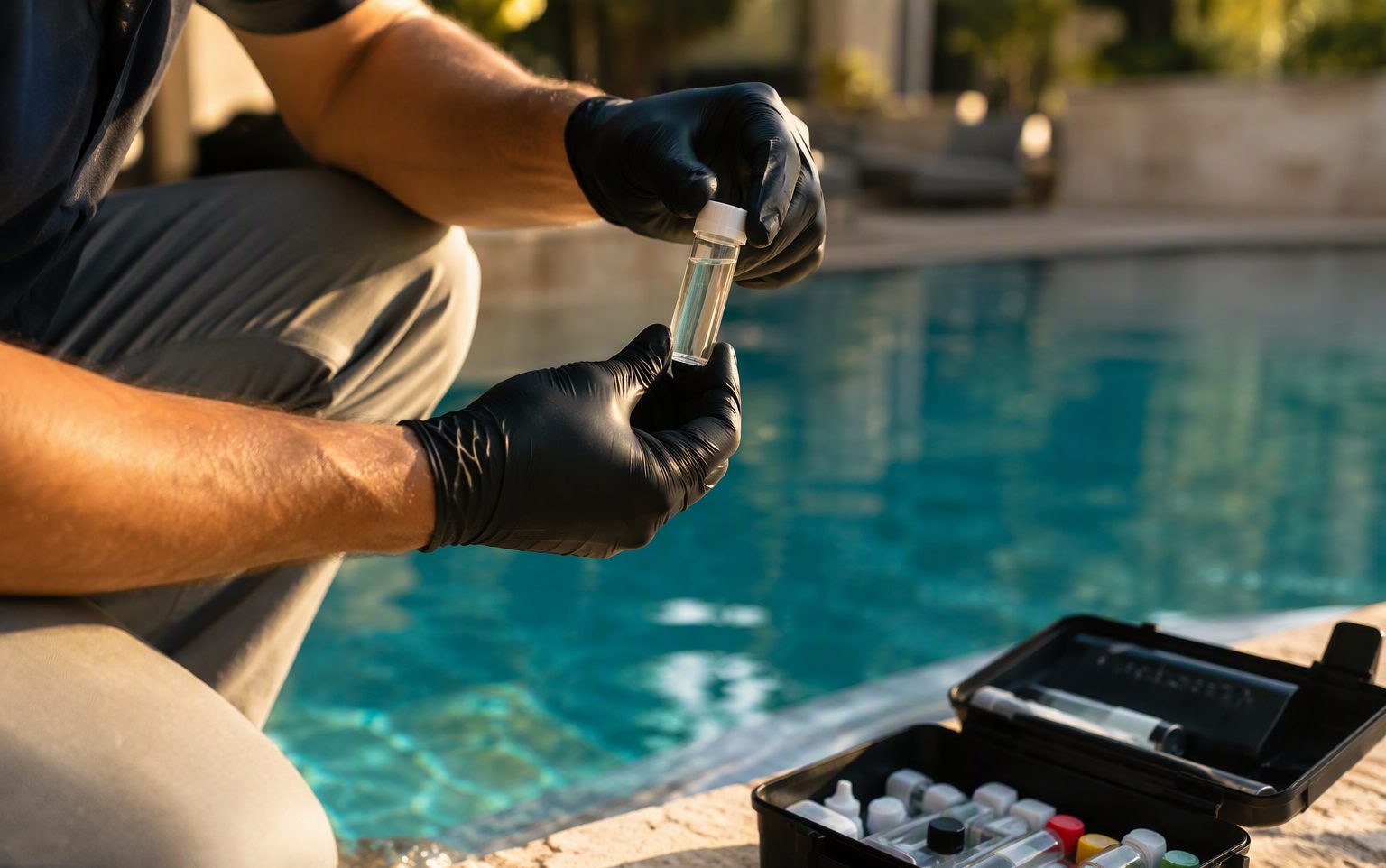
Closing a pool with unbalanced water is marinating your plaster in corrosive water for five months. Low pH and alkalinity etch plaster; you'll see it as roughness and staining at opening. The closing dose matters too — a proper algaecide and a chlorine level that survives the first warm spell of March, which is when most 'mystery' spring algae actually starts, under the cover, out of sight.
The cheap mistake that isn't: the cover
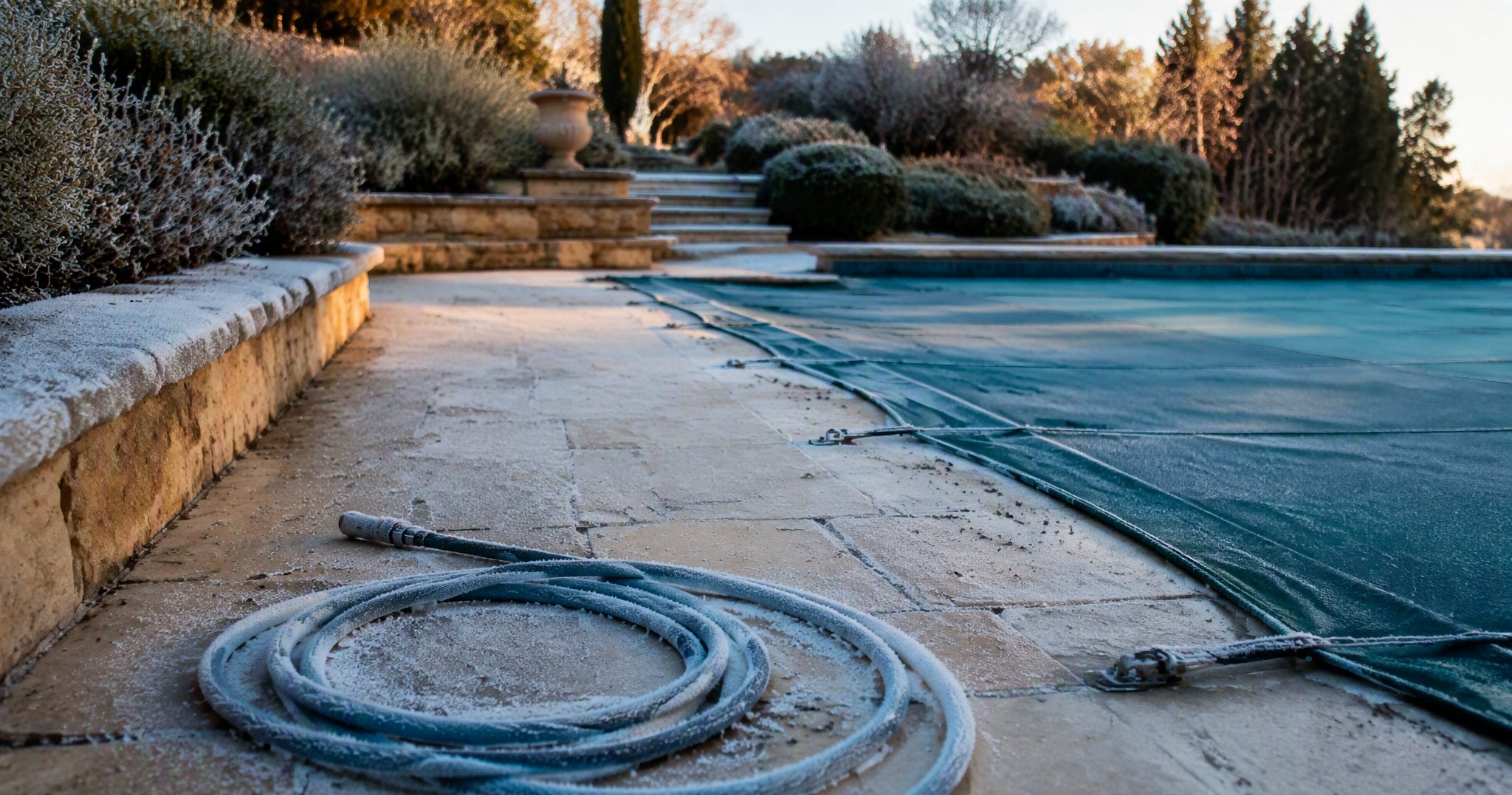
A loose cover is worse than no cover. It collects water and leaves into a swamp that overflows into the pool, it lets sunlight through to feed algae, and it's a genuine safety hazard. A safety cover should be drum-tight; a tarp cover needs its water bags actually filled. This is the one step homeowners most often get 90% right — and 90% is where the problems live.
What you can safely skip
Draining the pool itself. Water in the shell is load-bearing — it holds back groundwater pressure, and an empty pool in a wet spring can literally lift or crack. Lower the water below the skimmer mouth, not to the floor. And you can skip 'winter pills' and mystery closing kits; the chemistry that matters is pH, alkalinity, calcium, sanitizer, and algaecide — the same five things that matter in July.